


Anisette
design Francesco Lucchese
Focus on the fastening system and a detailed guide to the installation of the four possible configurations.
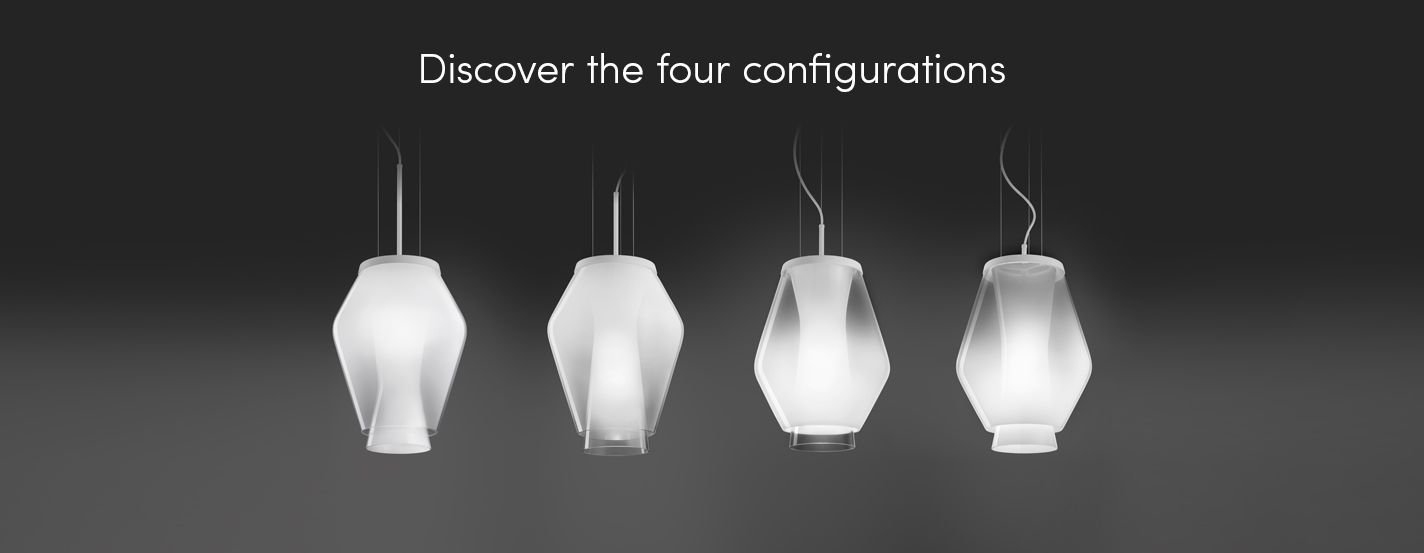
Four possible configurations obtained by rotating the two diffusers.
An innovative fixing system that completely conceals the frame and allows the installation of the glass without drilling, engineered as an adaptive mechanical fastening system. Its main defining features are as follows:
- Universal adaptability: Thanks to the inclined flanges with adjustment slots, the system adapts to handcrafted glass, always ensuring a perfect fit.
- Long-life reliability: Plastic inserts and bonded components have been eliminated. The result is a purely mechanical fixing system that does not yellow, crystallize or lose effectiveness over time, even when exposed to heat sources or UV rays.
- Safety and stability: The screw fastening ensures a consistent structural hold, superior to any solution based on chemical adhesives.
- Clean and serviceable design: The absence of glue residue ensures a neat installation and makes any maintenance or glass replacement operations easier.
PRODUCTS INVOLVED:
ANISETTE collection
Installation steps
1_Place the outer glass on a flat surface.
The large glass can be positioned with the gradient facing either downward or upward; the procedure remains the same.

Large outer glass: two possible positions
2_Take the frame, remove the magnetic cover cap and loosen the screws of the inner ring to allow the six tabs to move.
Move three tabs towards the inside (these will secure the large glass).
Move three tabs towards the outside (these will secure the small glass).
Position the tabs alternately, moving them inwards and outwards.
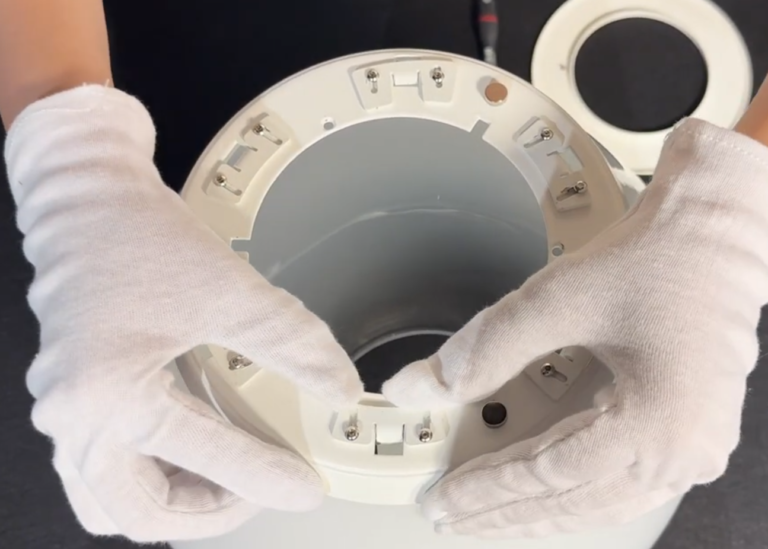
Tab positioning
3_Place the ring, configured in this way, over the large glass and move the tabs from the inside towards the outside. Then tighten the two screws of each of the three tabs.
4_Take the larger diffuser and place it over the smaller one, which can be positioned with the gradient facing either upward or downward.
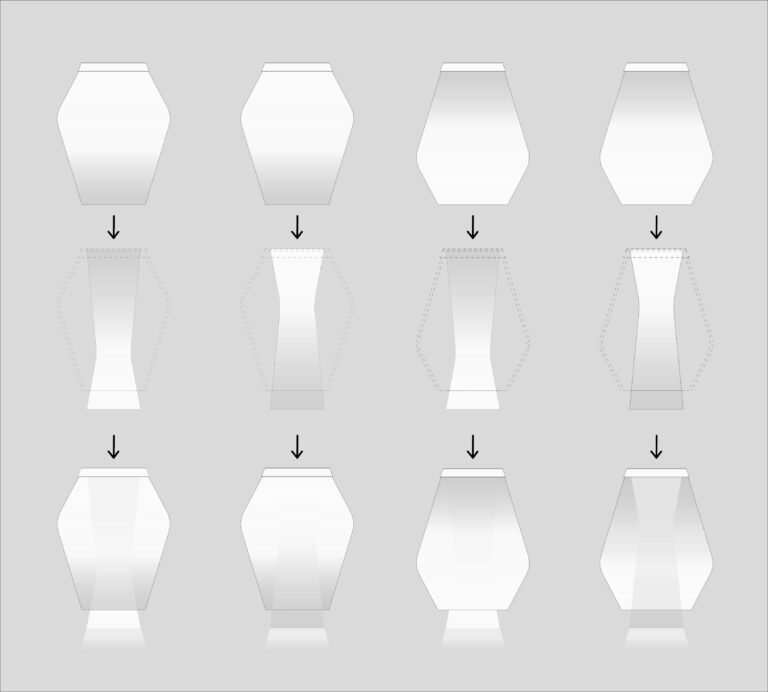
Configurations
5_ Move the three outer tabs inwards and tighten the screws to secure the smaller glass.
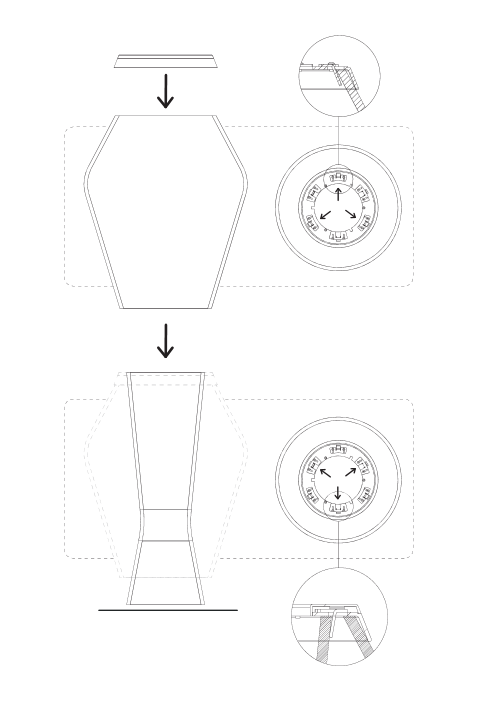
Glass locking
6_Secure the inner frame to the rod using the grub screws to set the height of the light source.
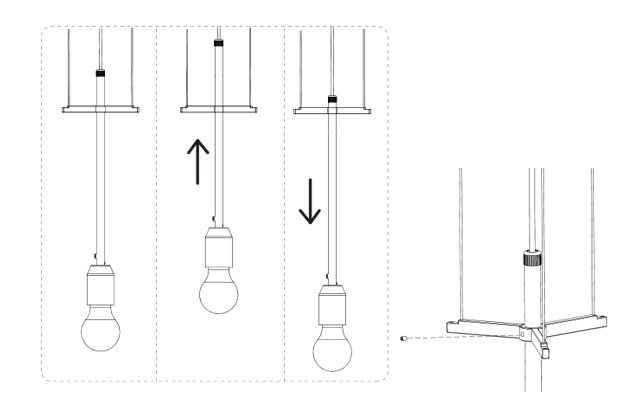
Rod fixing
7_Close the magnetic cover.
IN-DEPTH ANALYSIS
Vibration test
To ensure the highest level of safety and reliability for Anisette, vibration tests were carried out focusing on the glass fixing mechanism, with the aim of simulating the various stress conditions the lamp may be subjected to over time.
The lamp was secured to a vibrating support in order to isolate and test the fixing mechanism. The tests, lasting a total of five hours, were conducted at progressively increasing intensity levels: initially low, to simulate common vibrations such as foot traffic or generic external stresses, and then higher, to verify resistance even under severe stress conditions.
The results were highly positive: the fixing mechanism kept the glass firmly in place even during wider oscillations (10–12 mm) generated by extreme vibrations, confirming the reliability of the system when properly installed and used.

